
Culture and Tradition of Bhutan: A Complete Guide for Travelers
Published on By Luxury Escape Bhutan11 min read
Bhutan is a unique Himalayan destination where ancient traditions, Buddhist spirituality, community life, and modern development remain closely connected. This guide explores the culture and tradition of Bhutan, covering its Buddhist heritage, festivals, traditional dress, architecture, arts and crafts, music and dance, archery, cuisine, hospitality, and cultural etiquette. It also highlights meaningful ways travelers can experience Bhutanese culture through monasteries, festivals, local communities, traditional food, and cultural activities. For travelers seeking an authentic and meaningful Himalayan journey, understanding Bhutanese culture provides a deeper appreciation of the country beyond its landscapes and famous attractions.
Contents
Bhutan is more than a Himalayan destination—it is a place where culture, spirituality and everyday life remain deeply connected. From ancient monasteries and colorful tshechus to traditional architecture, textiles, food and archery, Bhutan offers travelers the opportunity to experience a living culture rather than simply observe it.
If you are planning a journey to Bhutan and want to understand the country beyond its famous landscapes, learning about Bhutanese culture and traditions is an important part of the experience.
In this guide, we explore the culture and tradition of Bhutan, including its Buddhist heritage, festivals, traditional dress, architecture, food, arts, sports and cultural etiquette.
What Makes Bhutanese Culture Unique?
Bhutan’s culture has developed through centuries of Himalayan history, Buddhist traditions and regional diversity. The country’s official tourism organization describes Bhutan as a culturally diverse nation where different communities, languages, traditions and artistic practices contribute to a shared Bhutanese identity.
What makes Bhutan particularly fascinating for travelers is that many traditions are not simply preserved as historical displays. They continue to be part of everyday life.
You may encounter:
· Buddhist monasteries and temples
· Prayer flags and chortens
· Traditional Bhutanese architecture
· Colorful religious festivals
· Traditional clothing
· Local crafts and weaving
· Archery competitions
· Traditional music and dance
· Bhutanese cuisine
· Community celebrations and ceremonies
This combination of heritage and modern life gives Bhutan its distinctive cultural character.
1. Buddhism and Spirituality in Bhutan
Buddhism is one of the most important influences on Bhutanese culture.
The country’s landscape is filled with monasteries, temples, dzongs, chortens and prayer flags. Buddhist beliefs influence religious practices as well as aspects of architecture, festivals, art and everyday life. Bhutan’s tourism authority describes Vajrayana Buddhist traditions as deeply embedded in the country’s cultural identity.
For travelers, this means that cultural sightseeing in Bhutan often goes beyond visiting monuments.
A visit to a monastery may provide an opportunity to observe:
· Prayer and meditation
· Religious paintings and murals
· Buddhist architecture
· Monastic ceremonies
· Prayer wheels and flags
· Traditional rituals
One of the best-known examples is Taktsang Monastery, commonly known as Tiger’s Nest, which sits dramatically on a cliff above the Paro Valley.
The experience becomes more meaningful when you understand that these places are not simply tourist attractions—they remain important sacred spaces.
2. Bhutanese Festivals and Tshechus
If you want to experience Bhutanese culture at its most colorful and energetic, consider traveling during a traditional festival.
Bhutan is famous for its tshechus, religious and cultural festivals that feature traditional dances, music, ceremonies and community gatherings. Festivals take place throughout the country and on different dates.
During a festival, visitors may see:
· Mask dances
· Traditional music
· Religious ceremonies
· Colorful traditional clothing
· Local food
· Community gatherings
· Traditional performances
The atmosphere is often as important as the performances themselves. Local people gather together, families meet, and communities celebrate their shared heritage.
Why should travelers experience a Bhutanese festival?
A festival can offer a deeper understanding of Bhutan because you are not simply looking at culture—you are seeing people actively participate in it.
However, visitors should remember that many festival activities have religious significance. Respectful behavior and appropriate photography are important.
3. Traditional Dress of Bhutan
Traditional clothing is another visible expression of Bhutanese identity.
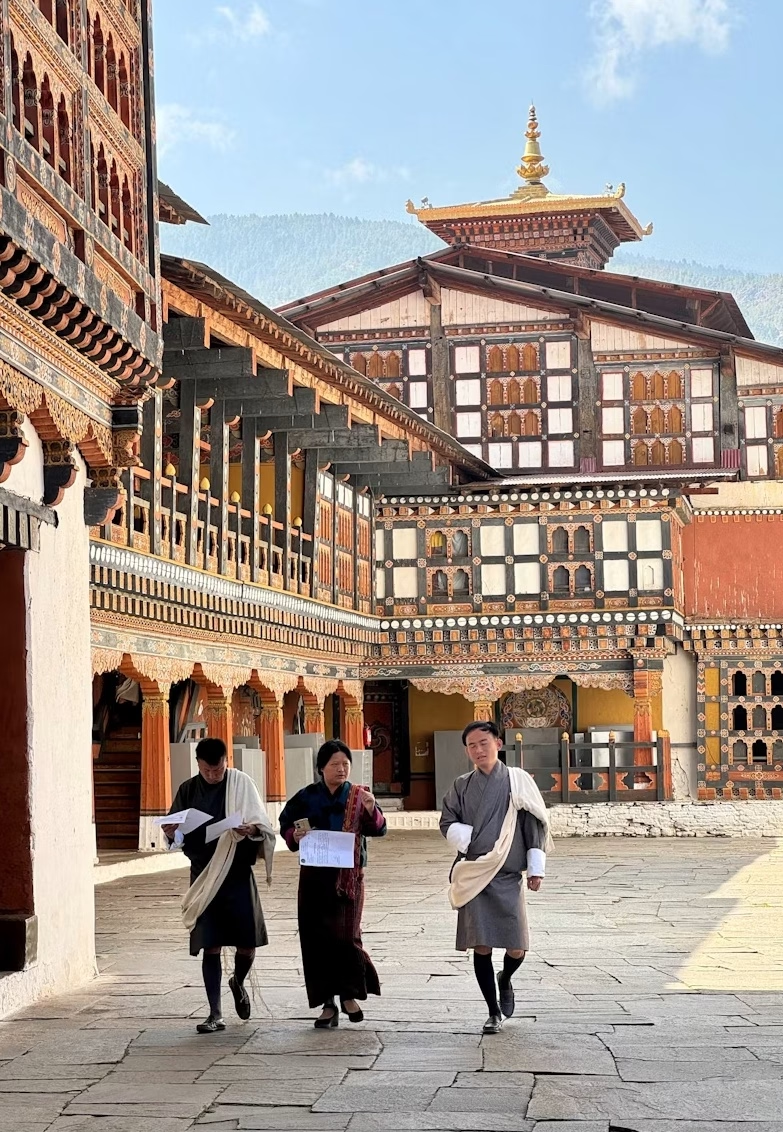
The gho is traditionally worn by Bhutanese men, while the kira is traditionally worn by women. Textiles and weaving are also important elements of Bhutan’s cultural heritage.
Bhutan’s textile traditions vary by region and include distinctive weaving techniques and patterns. Traditional fabrics continue to be worn for important occasions such as festivals, celebrations and formal events.
For travelers, traditional dress is particularly noticeable when visiting:
· Dzongs
· Government offices
· Festivals
· Schools
· Religious sites
· Formal cultural events
The clothing is therefore more than a visual symbol of Bhutan—it represents craftsmanship, identity and continuity.
4. Bhutanese Architecture: Dzongs, Temples and Traditional Homes
One of the first things travelers notice in Bhutan is its distinctive architecture.
Traditional Bhutanese buildings often feature:
· Whitewashed walls
· Wooden windows
· Decorative paintings
· Sloping roofs
· Intricate woodwork
· Large courtyards
The country’s dzongs are particularly significant. These impressive fortress-monasteries historically served religious and administrative purposes and remain important cultural landmarks.
What is a dzong?
A dzong is a large traditional Bhutanese structure that combines religious and administrative functions.
Some of the most notable examples include:
· Punakha Dzong
· Tashichho Dzong
· Paro Dzong
· Trongsa Dzong
Exploring these buildings allows travelers to appreciate how Bhutan’s architecture connects history, religion and community life.
5. Bhutanese Arts and Crafts
Bhutan has a strong tradition of arts and crafts known as Zorig Chusum, commonly translated as the thirteen traditional arts and crafts.
These traditions include skills such as:
· Painting
· Sculpture
· Wood carving
· Weaving
· Embroidery
· Metalwork
· Pottery
· Bamboo and cane work
These crafts have been passed between generations and remain an important part of Bhutan’s cultural heritage.
For visitors interested in culture, visiting local workshops or craft centers can be a rewarding way to understand the skill and patience behind Bhutanese handmade products.
Rather than simply purchasing a souvenir, travelers can learn about the techniques, stories and traditions behind the object.

6. Traditional Music and Dance
Music and dance are deeply connected to Bhutan’s religious and cultural traditions.
During festivals, visitors may encounter traditional dances performed in elaborate costumes and masks. Bhutanese music also includes different forms of folk, religious and contemporary music.
Traditional performances can communicate stories, beliefs and historical events while bringing communities together.
This is one reason attending a festival or cultural performance can make a Bhutan trip more memorable: you experience traditions through sound, movement and storytelling, rather than through written information alone.
7. Archery: Bhutan’s National Sport
Archery, known locally as dha, is Bhutan’s national sport and an important part of the country’s cultural life.
Traditional archery competitions can be lively social occasions, with participants and spectators gathering together.
Bhutan’s tourism authority highlights archery alongside traditional arts as an important part of the country’s cultural heritage.
If your itinerary allows, experiencing a local archery event can give you another perspective on Bhutanese community life.
8. Bhutanese Food and Traditional Cuisine
Food is an essential part of experiencing any culture, and Bhutan is no exception.
Bhutanese cuisine is known for bold flavors, rice-based meals, vegetables, meat and generous use of chilies.
One of the country’s best-known dishes is ema datshi, a combination of chilies and cheese. Other traditional dishes include varieties of datshi, stews, rice dishes and momos.
Some dishes travelers may encounter include:
· Ema datshi
· Kewa datshi
· Jasha maru
· Phaksha paa
· Shakam paa
· Jaju
· Momos
Food also provides an opportunity to experience Bhutanese hospitality.
Trying a meal in a local setting can often tell you something about everyday life that a sightseeing tour alone cannot.
9. Bhutanese Hospitality and Community Life
Bhutanese culture places strong importance on community, hospitality and respect.
Travelers may notice that traditional values remain visible in everyday interactions, particularly in rural communities.
Bhutan’s cultural diversity also means that traditions can vary between regions and communities. The country’s official tourism information highlights several distinct cultural groups and languages across the kingdom.
This regional diversity is one reason a carefully designed itinerary can provide a richer experience than simply visiting the most famous attractions.
10. Gross National Happiness and Bhutanese Values
You may have heard Bhutan associated with Gross National Happiness (GNH).
GNH is an important part of how Bhutan presents its approach to development and well-being. Its framework emphasizes areas including sustainable development, cultural preservation, environmental conservation and good governance.
For travelers, the idea provides another way to understand why culture and environmental protection are given such importance in Bhutan.
The country’s approach encourages visitors to think beyond conventional sightseeing and consider how tourism can contribute positively to communities, heritage and the environment.
11. Cultural Etiquette: What Should Travelers Know?
Respecting local customs is essential when visiting Bhutan.
When visiting religious and sacred sites, travelers should be particularly mindful.
Bhutan’s official travel guidance recommends practices such as:
· Dress respectfully when visiting temples and monasteries.
· Keep quiet at sacred sites.
· Ask permission before photographing people.
· Avoid photographing where photography is restricted.
· Do not touch religious objects without permission.
· Remove shoes where required.
· Respect people who are praying or participating in religious activities.
· Follow the guidance of your local guide at religious sites.
A respectful traveler does not need to know every Bhutanese custom before arriving. The most important thing is to remain observant, polite and willing to learn.
12. How Can Travelers Experience Bhutanese Culture?
Reading about Bhutanese culture is useful—but experiencing it personally is something different.
Depending on your interests and itinerary, cultural experiences can include:
Visit ancient dzongs and monasteries
Explore important religious and historical sites in destinations such as Paro, Thimphu and Punakha.
Attend a traditional festival
Plan your journey around a suitable tshechu or other cultural festival.
Explore local crafts
Visit traditional art and textile centers to learn about Bhutan’s craftsmanship.
Taste local cuisine
Try traditional Bhutanese dishes and, where appropriate, experience meals in local settings.
Meet local communities
Spend time beyond major sightseeing locations and discover regional lifestyles.
Experience traditional Bhutanese activities
Depending on availability and season, you may experience activities such as archery, traditional performances or local cultural demonstrations.
The key is to build your itinerary around experiences rather than simply collecting attractions.
Best Way to Experience Bhutanese Culture
If culture is your main reason for visiting Bhutan, consider creating an itinerary that combines:
Experience | What You Discover |
Dzong visits | History, architecture and Buddhism |
Monasteries | Spiritual traditions |
Festivals | Music, dance and community |
Local food | Everyday Bhutanese life |
Textile experiences | Traditional craftsmanship |
Archery | National sport and community culture |
Rural visits | Local lifestyles and traditions |
Traditional homes | Architecture and family life |
A personalized itinerary allows these experiences to be arranged around your interests, travel pace and preferred level of comfort.
Why Choose a Local Bhutan Travel Expert?
Planning a culturally focused Bhutan journey is about more than deciding which places to visit.
A knowledgeable local travel partner can help you understand:
Which cultural sites fit your interests
Which festivals coincide with your travel dates
How much time to spend in each destination
Appropriate behavior at religious sites
Local experiences that may not be obvious from a standard itinerary
Comfortable transportation and accommodation
How to create a balanced cultural and scenic journey
At Luxury Escape Bhutan, our team in Thimphu designs private journeys that help travelers experience Bhutan in a way that feels personal, comfortable and meaningful.
Rather than offering a one-size-fits-all journey, we can help shape your Bhutan experience around your interests—from cultural discovery and spirituality to nature, photography, trekking and relaxation.
Frequently Asked Questions About Bhutanese Culture
What is Bhutan famous for culturally?
Bhutan is particularly known for its Buddhist heritage, dzongs and monasteries, traditional architecture, festivals, textiles, arts and crafts, archery, traditional cuisine and distinctive cultural traditions.
What are the main traditions of Bhutan?
Important traditions include Buddhist religious practices, tshechu festivals, traditional dress, weaving and crafts, archery, traditional music and dance, and community celebrations.
What should tourists wear in Bhutan?
Travelers should dress respectfully, especially when visiting temples, monasteries and other sacred sites. Bhutan’s official travel guidance recommends long sleeves and covered legs when visiting temples.
Can tourists experience Bhutanese culture?
Yes. Travelers can experience Bhutanese culture through monasteries, dzongs, festivals, local food, traditional arts and crafts, archery, community experiences and cultural activities.
What food is Bhutan famous for?
Bhutan is particularly well known for ema datshi, a chili-and-cheese dish. Other traditional foods include different datshi dishes, stews, rice dishes and momos.
When is the best time to experience Bhutanese festivals?
Festival dates vary by location and year because many traditional festivals follow the Bhutanese lunar calendar. Travelers should check the official festival calendar when planning their journey.
Experience the Living Culture of Bhutan
Bhutan’s culture is not something that exists only inside museums or history books.
It can be found in the sound of monastery bells, the colors of traditional textiles, the architecture of ancient dzongs, the excitement of an archery match, the flavors of a home-style meal and the gatherings of communities during festivals.
That is what makes traveling through Bhutan so special.
You don’t simply visit Bhutan—you have the opportunity to experience its living traditions.
Ready to Experience Bhutan Beyond the Ordinary?
Let your journey be more than a checklist of famous places.
Explore Bhutan through its culture, traditions, people and landscapes with a personalized journey designed around you.
Luxury Escape Bhutan can create a private journey tailored to your interests, preferred pace and travel style, from cultural journeys and the Festivals of Bhutan Luxury Tour to the Heritage & Monastery Journey and treks.
Start planning your personalized Bhutan journey today.
Luxury Escape Bhutan
Travel writer sharing stories, guides, and expert tips to help you plan your next trip.
Planning a journey to Bhutan?
Tell us when you would like to travel and what matters to you. We reply personally with a first outline.